
 Pin it
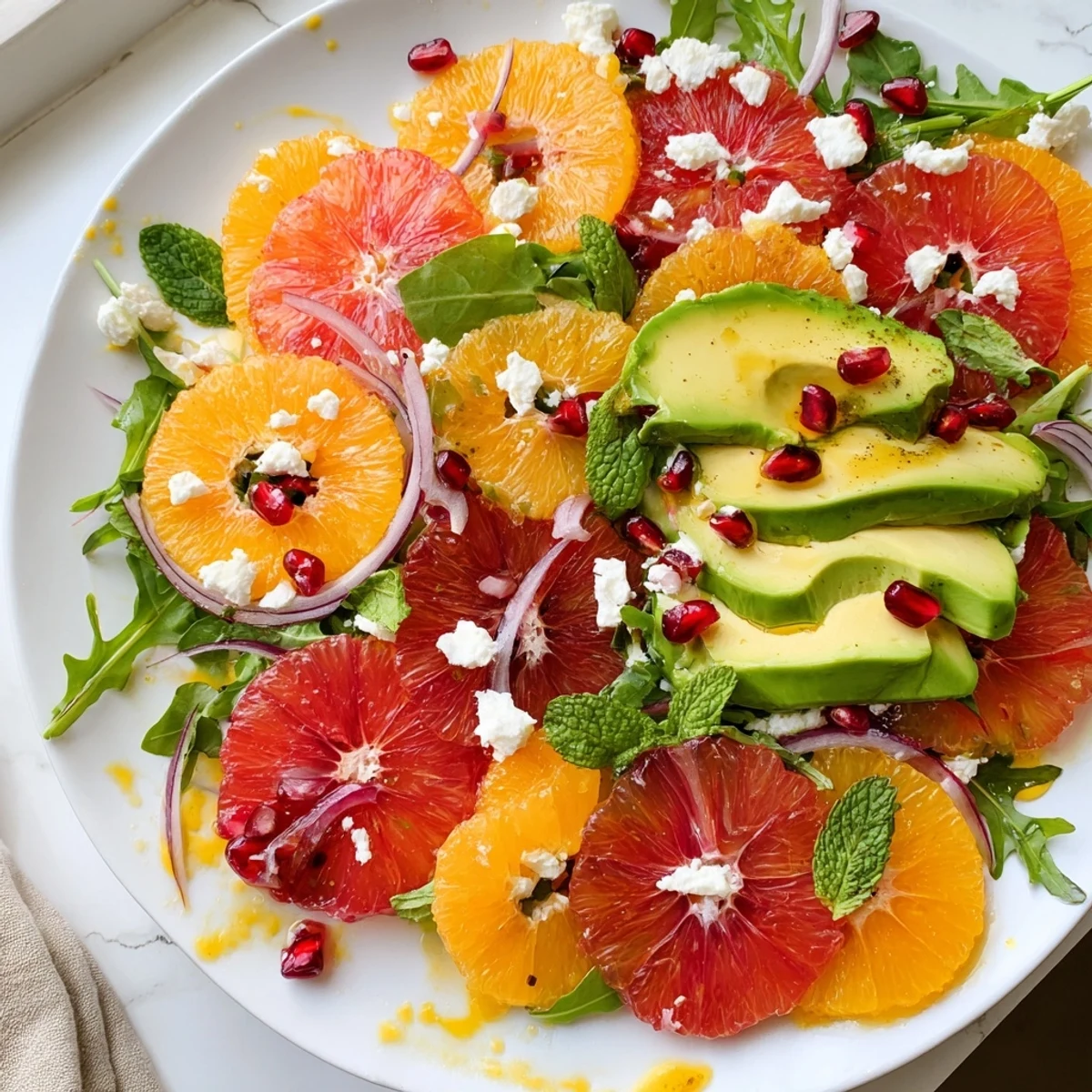
 This vibrant Mediterranean citrus salad comes together in just 15 minutes with no cooking required. Juicy orange and grapefruit slices are layered over peppery arugula, then topped with creamy avocado, jewel-like pomegranate arils, and tangy crumbled feta.
A simple honey-lemon vinaigrette ties everything together, balancing sweet, tart, and salty flavors in every bite. Perfect as a light starter or a refreshing lunch on warm days.
The kitchen window was fogged up from a January rainstorm when I started slicing oranges and realized I had a pomegranate sitting on the counter that had been there for a week, daring me to open it. That fruit became the star of the most colorful plate I have ever assembled, and now I cannot imagine winter without making this salad at least twice a month. The contrast of juicy citrus against salty feta and those jewel-like arils feels like edible sunshine on a grey day. It takes almost no effort, which is exactly the kind of cooking that suits me best.
I brought this to a potluck once and watched a friend who swears she hates grapefruit go back for a third helping, which told me everything I needed to know. The feta and honey dressing soften the bitterness in a way that feels almost sneaky.
Ingredients
- 2 large oranges: Navel or Cara Cara work beautifully, and the sweeter the better since they form the base of the entire salad.
- 2 medium pink grapefruits: Ruby red grapefruits give the best color, and their slight tartness balances the richness of avocado and feta.
- 1 small blood orange (optional): If you spot these at the market, grab them because the deep crimson slices turn the platter into something genuinely stunning.
- 1 ripe avocado: Choose one that yields slightly to pressure but is not mushy, as firm slices hold their shape on the plate.
- 1/2 cup pomegranate arils: These are the jewels of the dish, and you can extract them from a whole fruit or buy them pre-packaged when you are short on time.
- 1/4 small red onion, thinly sliced: Soak the slices in ice water for five minutes if you find raw onion too sharp, and this tames the bite without losing the crunch.
- 2 cups baby arugula or mixed greens: Arugula adds a peppery note that ties everything together, but a spring mix works if that is what you have on hand.
- 1/2 cup feta cheese, crumbled: Use block feta and crumble it yourself because the pre-crumbled variety tends to be drier and less flavorful.
- 3 tbsp extra virgin olive oil: A fruity, good quality olive oil makes a noticeable difference here since the dressing is so simple.
- 1 tbsp fresh lemon juice: Fresh is non-negotiable, and bottled juice will flatten the bright character of the whole dish.
- 1 tsp honey or maple syrup: Just a touch rounds out the acidity and bridges the gap between the fruit and the savory elements.
- 1/2 tsp sea salt and 1/4 tsp black pepper: Seasoning matters more than you think in a raw salad, so taste and adjust before serving.
- 2 tbsp fresh mint leaves, torn (optional): Mint scattered on top at the last second adds a fragrant finish that catches people off guard in the best way.
Instructions
- Whisk the dressing:
- In a small bowl, combine the olive oil, lemon juice, honey, salt, and pepper, and whisk until the mixture looks slightly creamy and unified. Give it a quick taste on your fingertip to check the balance before moving on.
- Layer the citrus:
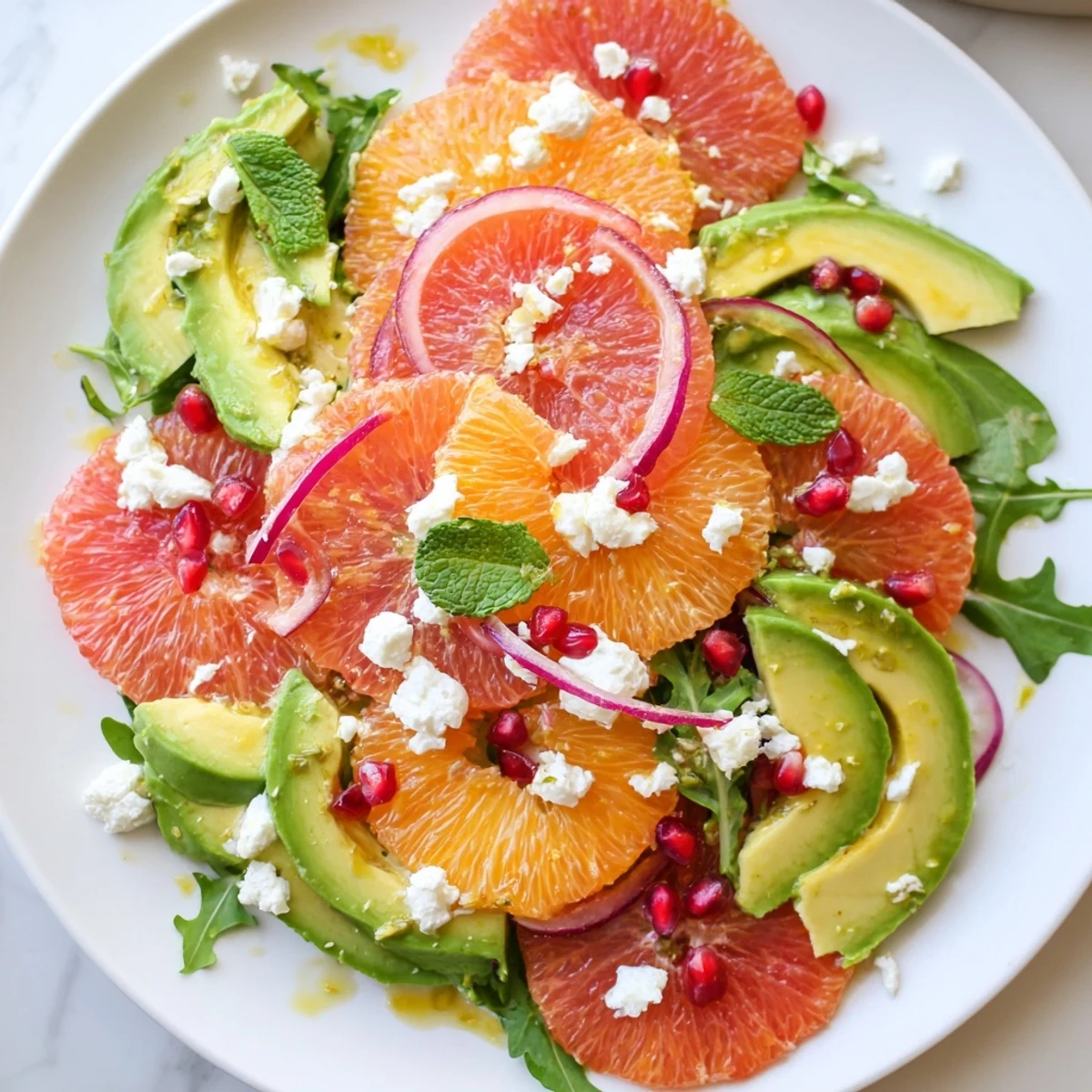
- Peel and slice all the oranges and grapefruits into rounds, then arrange them across a large platter or shallow bowl, overlapping them slightly so the colors mingle. Tuck the blood orange slices into the gaps if you are using them.
- Build the salad:
- Scatter the arugula and red onion slices over the citrus bed, letting some fruit peek through. Lay the avocado slices on top and shower everything with pomegranate arils, distributing them evenly so each serving gets a fair share.
- Dress and finish:
- Drizzle the whisked dressing over the entire platter, then crumble the feta across the top with your hands, letting the pieces fall naturally. Scatter torn mint leaves over everything and serve immediately while the greens are still perky.
 Pin it
 There was a Sunday when I made this for my mother, who took one photo and sent it to three friends before she even picked up a fork. She now requests it every time she visits, and I have learned to buy double the pomegranate.
Choosing and Prepping Citrus
Pick fruits that feel heavy for their size because that indicates juiciness, and avoid any with soft spots or thick, puffy rinds. Use a sharp knife to slice off the top and bottom so the fruit sits flat, then work your way around to remove the peel and white pith in strips before cutting crosswise into rounds.
Getting Arils Without the Mess
Score the pomegranate skin into quarters, submerge it in a bowl of water, and gently pry it apart with your fingers to release the seeds. The arils sink and the white membrane floats, making it easy to skim off the debris and drain the jewels clean.
Making It Your Own
This salad is endlessly forgiving, and you should feel free to swap ingredients based on what looks good at the store. A few simple additions can shift the whole personality of the dish.
- Scatter toasted pistachios or walnuts over the top for a satisfying crunch that contrasts with the soft fruit.
- Swap feta for goat cheese if you prefer a tangier, creamier finish.
- Use a plant-based feta and replace honey with maple syrup to keep the entire dish vegan.
 Pin it
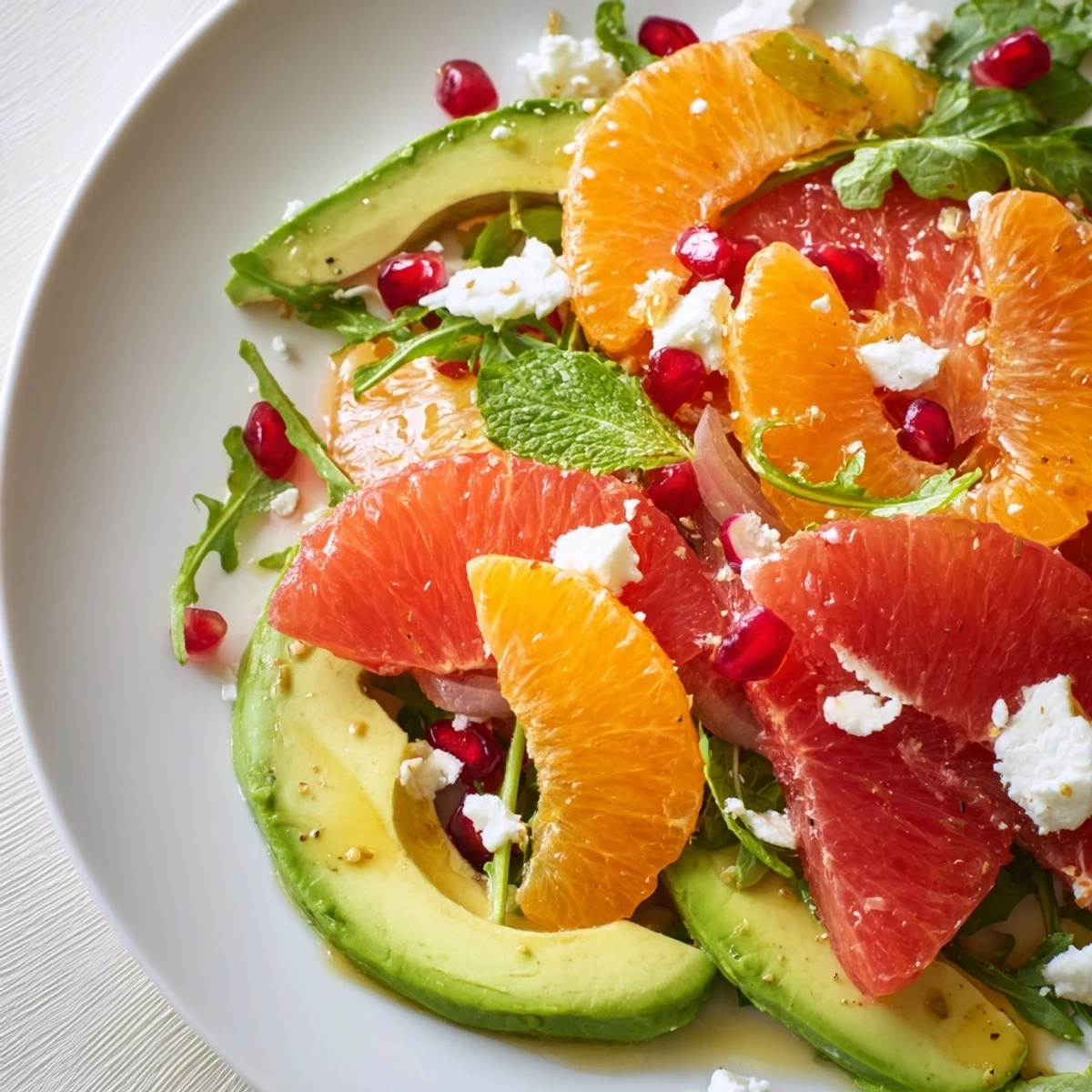
 Keep it simple, trust the ingredients, and let the colors do the talking. This is the kind of recipe that reminds you how little effort it takes to make something beautiful.
Recipe FAQs
- → Can I prepare this citrus salad ahead of time?
-
You can prep the dressing and slice the citrus up to a few hours in advance, but wait to add the avocado and arugula until just before serving to keep everything fresh and vibrant.
- → What's the best way to segment citrus fruits for this salad?
-
Use a sharp knife to cut off the top and bottom of each fruit, then slice away the peel and white pith following the curve. Cut crosswise into rounds, or use a knife to cut between membranes for individual segments.
- → How do I easily remove pomegranate arils?
-
Cut the pomegranate in half and hold it cut-side down over a bowl. Tap the back firmly with a wooden spoon and the arils will fall out. Remove any white membrane pieces before adding them to the salad.
- → What can I substitute for feta cheese?
-
Goat cheese works beautifully for a tangier flavor. For a dairy-free option, try a plant-based feta alternative or simply omit the cheese and add a sprinkle of toasted nuts for texture.
- → Which citrus fruits work best in this salad?
-
Navel oranges and pink or ruby red grapefruit are ideal for their sweetness and color. Blood oranges add a stunning visual element. You can also include tangerines or pomelo for variety.
- → Is this salad suitable for a vegan diet?
-
Replace the honey with maple syrup in the dressing and use a plant-based feta alternative to make this salad fully vegan while keeping the same delicious flavor profile.