
 Pin it
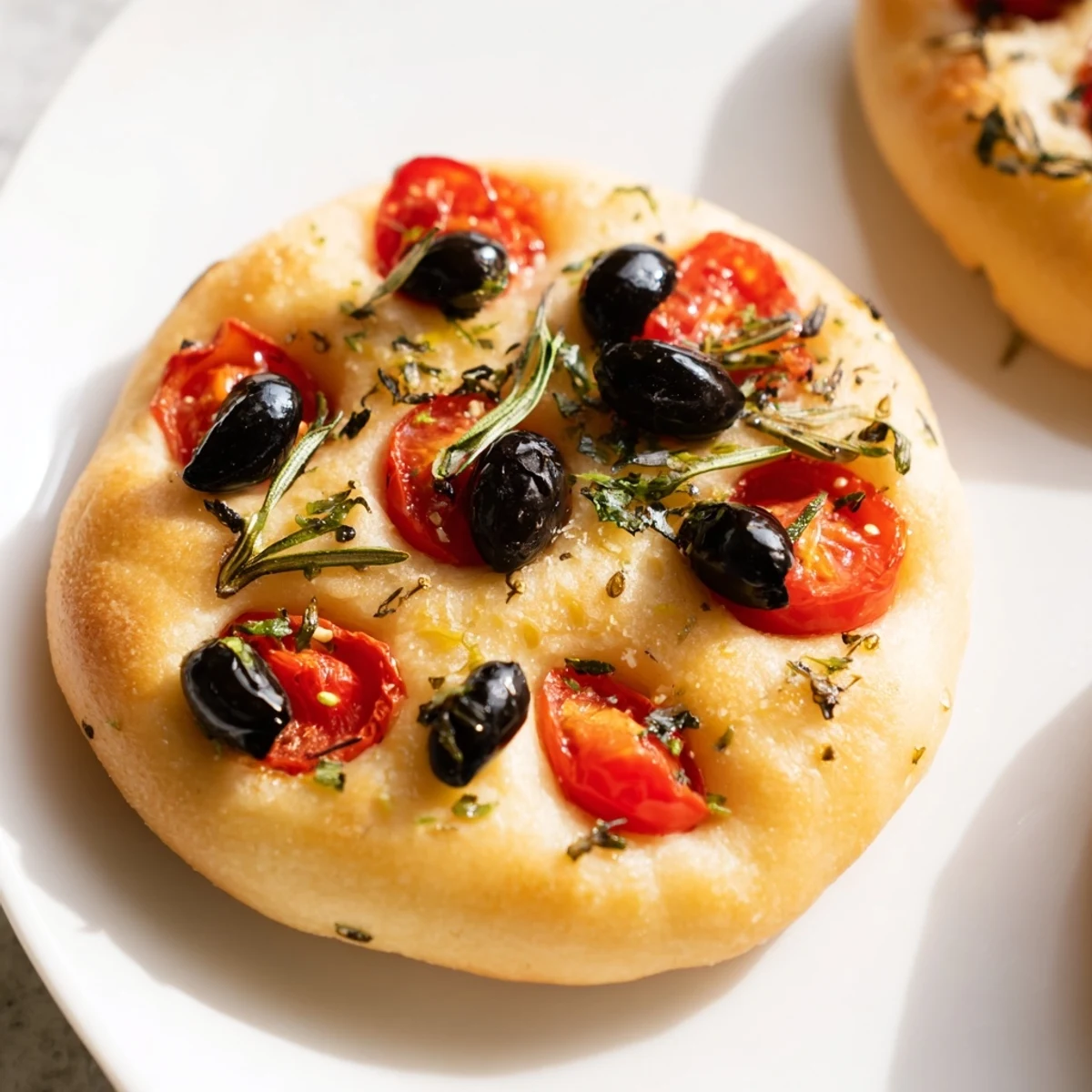
 These individual-sized Italian breads feature a signature crispy golden crust and incredibly fluffy, aromatic interior. Each mini focaccia is hand-dimpled and generously brushed with extra-virgin olive oil, then sprinkled with flaky sea salt and fresh rosemary for authentic Mediterranean flavor.
The dough requires just 20 minutes of active preparation before rising, then bakes in under 20 minutes until perfectly golden and crisp. Optional cherry tomatoes and black olives add color and savory depth, while the versatile base welcomes endless variations like caramelized onions or parmesan.
Enjoy these warm alongside soups and salads, or serve as an impressive appetizer that captures the essence of traditional Italian baking in bite-sized form.
The smell of rosemary hitting hot olive oil still takes me back to my tiny apartment kitchen, where I'd make these mini focaccias on Friday evenings just because. My roommate would wander in, drawn by the aroma, and we'd eat them warm while standing at the counter, talking about everything and nothing. Those simple moments taught me that good bread doesn't need fancy equipment or hours of expertise—just patience and the willingness to get your hands a little floury.
Last summer, I made these for a backyard gathering and watched them disappear in under five minutes. My friend's daughter, who claimed she didn't like bread, reached for a third one and asked if I could teach her how to make them. Seeing someone discover that homemade focaccia bears no resemblance to store-bought versions? That's the kind of kitchen magic that keeps me baking.
Ingredients
- All-purpose flour (2 cups): Bread flour works too, but all-purpose gives a beautifully tender crumb that's still substantial enough to hold all those toppings
- Lukewarm water (3/4 cup): Test it on your wrist like you would for a baby's bath—too hot kills the yeast, too cold makes it sluggish
- Active dry yeast (1½ tsp): If your water-yeast mixture doesn't get foamy after 5 minutes, your yeast might be dead and you'll need to start fresh
- Fine sea salt (1 tsp): Goes into the dough—flaky salt is for the finishing touch on top, creating those gorgeous salty bursts
- Extra-virgin olive oil (1 tbsp for dough, 2 tbsp for topping): Don't skimp here, the oil is what creates those irresistible crispy edges and golden color
- Sugar (1 tsp): Just enough to feed the yeast and help browning—your focaccia won't taste sweet
- Flaky sea salt (1 tbsp): Maldon or another flaky variety adds texture and those concentrated pops of saltiness
- Fresh rosemary (1 tbsp, finely chopped): Dried rosemary works in a pinch, but fresh gives an aromatic brightness that's unbeatable
- Cherry tomatoes (8, halved) and black olives (1/4 cup, sliced): Completely optional, but they add color and briny flavor that pairs perfectly with the herbs
Instructions
- Wake up the yeast:
- Combine the lukewarm water, sugar, and yeast in a large bowl, then walk away for exactly 5 minutes. When you return, the surface should look foamy and alive—if it doesn't, your yeast might be too old or the water was the wrong temperature.
- Bring the dough together:
- Add the flour, salt, and 1 tablespoon olive oil to the yeast mixture. Mix with a wooden spoon until a sticky, shaggy dough forms—it won't look pretty yet, and that's completely normal.
- Knead until smooth:
- Scrape the dough onto a lightly floured surface and knead for 5 to 7 minutes, pushing it away with the heel of your hand, folding it back, and giving it a quarter turn. The dough should transform from sticky and rough to smooth, elastic, and slightly tacky.
- Let it rise:
- Place the dough in a lightly oiled bowl, turning it once to coat all sides, then cover with a damp cloth. Set it somewhere warm and draft-free for about 1 hour, until it's doubled in size and puffy to the touch.
- Preheat and prepare:
- While the dough rises, preheat your oven to 425°F (220°C) and line a baking sheet with parchment paper. If you have a baking stone, now's the time to preheat it too.
- Shape the mini focaccias:
- Punch down the risen dough gently to release air, then divide it into 8 equal pieces. Shape each piece into a small round or oval and arrange them on the prepared baking sheet, leaving space for spreading.
- Add the signature dimples:
- Use your fingertips to press deep indentations all over each dough round—these little wells catch the olive oil and create those classic focaccia textures. Brush generously with olive oil.
- Top with flair:
- Sprinkle each mini focaccia with flaky sea salt and rosemary, pressing them gently into the dimples. Add cherry tomato halves and olive slices if you're using them, tucking them into the dough so they don't roll off.
- Bake to golden perfection:
- Bake for 18 to 20 minutes, rotating the baking sheet halfway through. You're looking for deep golden color, a crispy crust, and bottoms that sound hollow when tapped.
- Cool briefly and serve:
- Let them cool on the baking sheet for just 5 minutes—hot enough to still be warm, cool enough not to burn your fingers. They're best eaten within a few hours, but they'll keep for a day in a paper bag.
 Pin it
 My mom now makes these every Sunday, experimenting with different toppings based on what's in her garden. Last week she sent me a photo of her latest batch—caramelized onions and thyme from her herb patch—and I could practically smell them through the screen. That's the thing about simple, honest food: it invites creativity and becomes whatever you need it to be.
Getting The Crispiest Crust
After years of making focaccia, I've learned that the secret to an ultra-crispy bottom is heat and steam. If you have a baking stone, preheat it for at least 30 minutes before baking—the intense heat creates that professional-bakery crunch. No stone? Place your baking sheet on the lowest rack of the oven and throw a few ice cubes onto the floor of the oven right before you close the door. The sudden burst of steam helps develop a beautifully crisp crust.
Toppings That Work
While the classic rosemary and sea salt combination is hard to beat, I've discovered some unexpected toppings through happy kitchen accidents. Thinly sliced garlic that caramelizes in the oven, grated lemon zest that brightens everything, or even small dollops of pesto pressed into the dimples. The key is not to overload the dough—too many heavy toppings will prevent it from rising properly and you'll end up with dense bread instead of fluffy perfection.
Make-Ahead Magic
These mini focaccias are surprisingly forgiving when it comes to timing. You can prepare the dough through the rising step, then cover and refrigerate it for up to 24 hours—the slow cold fermentation actually develops more flavor. When you're ready to bake, let the dough come to room temperature for 30 minutes before shaping. You can also freeze the baked, cooled focaccias for up to a month and refresh them in a 350°F oven for 5 to 8 minutes.
- Revive day-old focaccia by sprinkling it with water and heating at 350°F for 5 minutes
- Leftover focaccia makes the best panini—split it horizontally and fill with whatever you have
- Store any extras in a paper bag, never plastic, or they'll get soggy
 Pin it
 There's something deeply satisfying about pulling a batch of these from the oven, golden and fragrant, and watching people's faces light up. They're not just bread—they're conversation starters, comfort food, and little edible moments of joy.
Recipe FAQs
- → What makes focaccia different from regular bread?
-
Focaccia is an Italian flatbread distinguished by its high olive oil content, dimpled surface, and thick, fluffy texture. Unlike regular bread, it's baked in a sheet pan, brushed generously with oil, and topped with sea salt, herbs, and sometimes vegetables before baking.
- → Why do you dimple focaccia dough?
-
Dimpling creates small pockets in the dough that collect olive oil and toppings, ensuring flavor permeates throughout. It also helps control air pockets during baking, resulting in that characteristic combination of crispy top and tender, airy interior.
- → Can I prepare the dough ahead of time?
-
Yes, after the initial rise, you can refrigerate the dough for up to 24 hours. This cold fermentation actually develops more complex flavors. Let it come to room temperature for 30 minutes before shaping and baking.
- → What's the best way to store leftover focaccia?
-
Store at room temperature in an airtight container or paper bag for up to 2 days. For longer storage, freeze individually wrapped portions for up to 3 months. Reheat in a 350°F oven for 5-7 minutes to restore crispiness.
- → Can I use bread flour instead of all-purpose?
-
Absolutely! Bread flour's higher protein content creates an even chewier texture with better structure. You may need slightly more water since bread flour absorbs more liquid. The result will be slightly denser but still delicious.
- → What other toppings work well on mini focaccia?
-
Try caramelized onions and thyme, sundried tomatoes with parmesan, roasted garlic with fresh basil, or even figs with gorgonzola and honey for a sweet variation. The olive oil base pairs beautifully with both savory and sweet toppings.