
 Pin it
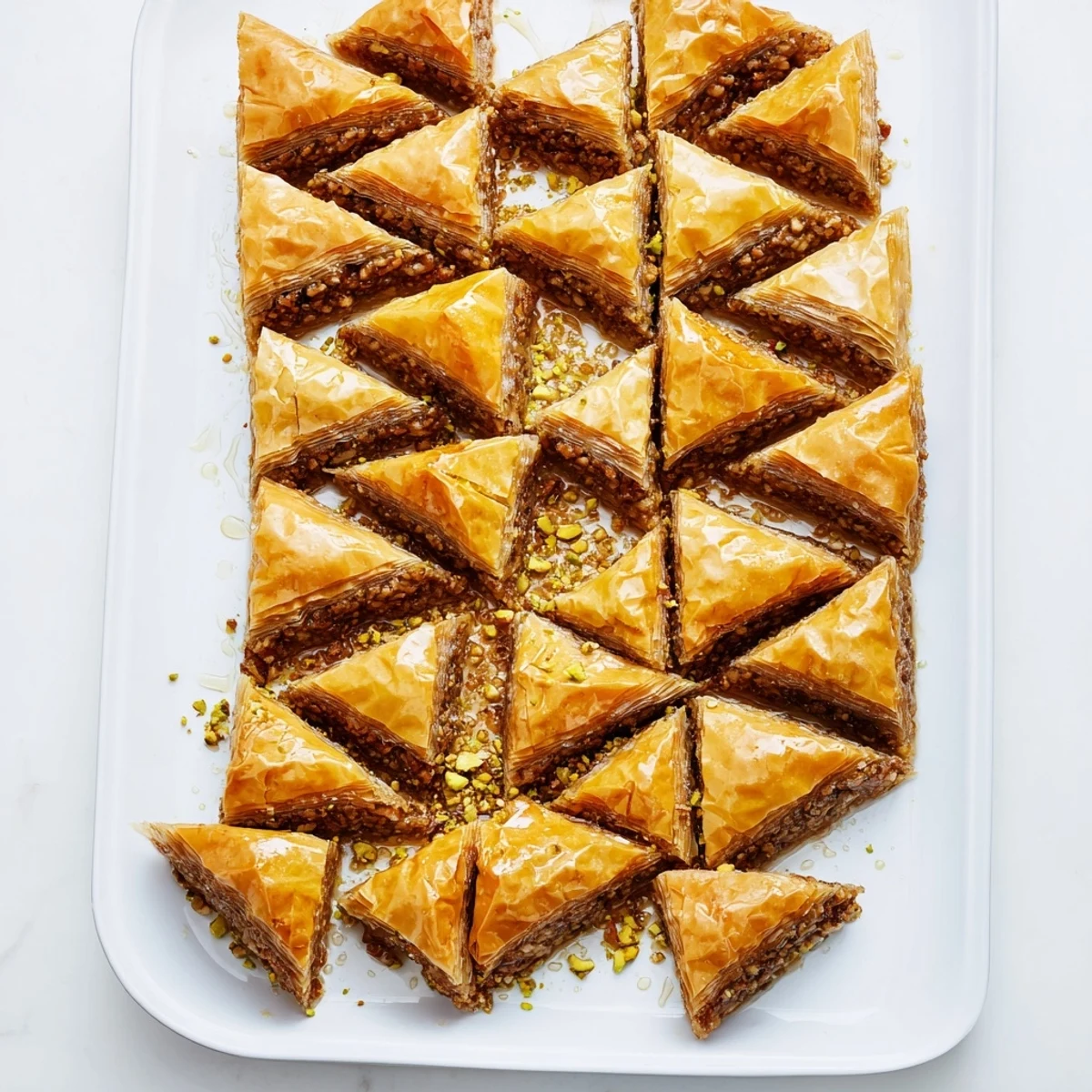
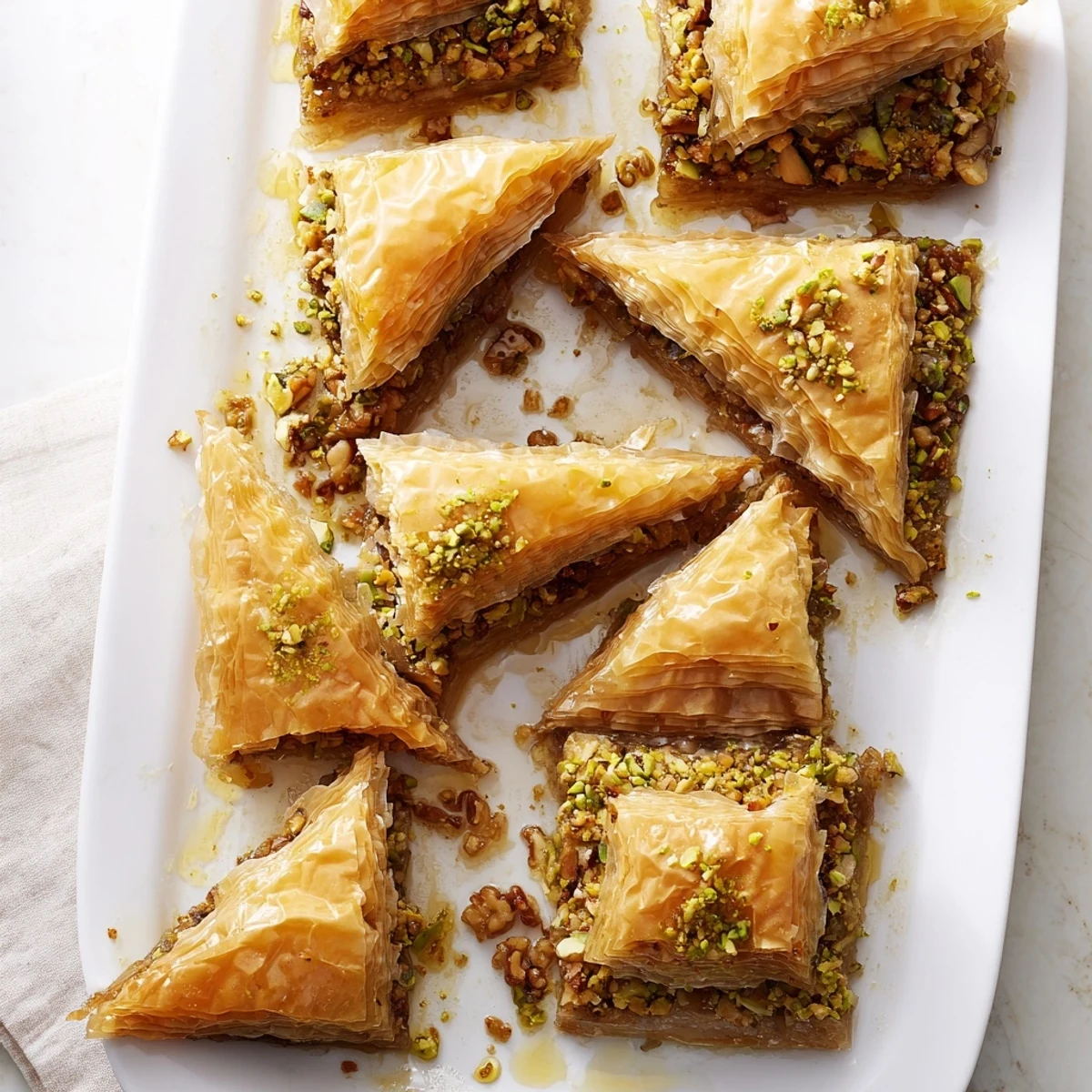
 Experience the authentic taste of Greece with this beloved dessert featuring delicate layers of buttery phyllo pastry stacked generously between a aromatic blend of walnuts, pistachios, and almonds seasoned with warm cinnamon and cloves. The golden baked masterpiece is transformed when poured over with a luscious honey-infused syrup, creating that irresistible sticky-sweet finish.
The technique involves carefully brushing each phyllo sheet with melted butter, alternating nut layers, and cutting before baking to ensure the syrup penetrates every crevice. The result combines satisfying crunch with tender, syrup-soaked centers that improve overnight as flavors deepen.
My yiayia (grandmother) would rise at dawn to make baklava for Sunday family gatherings, the house filling with cinnamon and butter before anyone else woke up. I learned that the secret isn't just the syrup—it's the patience you need while layering those tissue-thin sheets, one by one, until your arm actually gets tired from brushing butter.
Last Christmas, I made three pans for our neighborhood potluck and watched them disappear within twenty minutes. My neighbor Maria, whose mother was from Athens, took one bite and said this reminded her exactly of childhood summers in Thessaloniki—better than any bakery version she'd found since moving here.
Ingredients
- 200 g walnuts, 100 g pistachios, and 50 g almonds, all finely chopped: The nut blend creates depth—walnuts provide earthiness, pistachios add that signature Greek flavor and gorgeous green flecks, while almonds round out the texture. Pulse them in short bursts so they stay slightly chunky, not powdery.
- 2 tsp ground cinnamon and 1/4 tsp ground cloves: These warm spices are non-negotiable for authentic Greek flavor. Cloves can overwhelm, so measure carefully—you want just a hint behind the cinnamon's sweetness.
- 2 tbsp granulated sugar in the filling: This small amount helps the nuts caramelize slightly during baking, creating those irresistible crispy bits throughout the layers.
- 400 g phyllo dough (about 20 sheets), thawed if frozen: Keep phyllo covered with a barely damp kitchen towel while you work—exposed sheets dry out in seconds and become impossible to handle. Don't worry if a sheet tears; patch it and keep going.
- 200 g unsalted butter, melted: Butter makes everything better, and baklava is no exception. Melt it completely and let it cool slightly so it coats the phyllo evenly without making it soggy. Clarified butter works even better if you want to be extra traditional.
- 250 g granulated sugar, 200 ml water, and 180 g honey: The honey-sugar balance creates a syrup that's sweet without being cloying. Greek honey (especially thyme or pine) adds incredible depth, but any good-quality honey will work beautifully.
- 1 cinnamon stick and 3 strips lemon peel: Simmering these aromatics in the syrup infuses it with subtle complexity that elevates the entire dish. Use a vegetable peeler to get wide strips of lemon peel without the bitter white pith.
Instructions
- Get your workspace and oven ready:
- Preheat your oven to 170°C (340°F) and butter a 23x33 cm baking dish thoroughly—every corner matters. Clear a large workspace and have all your ingredients within arm's reach because once you start layering, you won't want to stop.
- Mix the nut filling:
- Combine the walnuts, pistachios, almonds, cinnamon, cloves, and 2 tablespoons of sugar in a large bowl. Toss them with your hands to distribute the spices evenly, then taste a small pinch—you should immediately sense the warmth of cinnamon.
- Prep the phyllo:
- Unroll the phyllo dough and immediately cover the stack with a lightly damp clean kitchen towel. Remove only the sheets you're actively using, keeping the rest covered at all times to prevent drying and cracking.
- Layer the bottom:
- Lay one phyllo sheet in your buttered dish, brush it lightly but thoroughly with melted butter, and repeat until you have 8 sheets total. Don't worry about perfect edges—slight overhang is fine and will be trimmed later.
- Add the first nut layer:
- Sprinkle exactly one-third of your nut mixture evenly across the buttered phyllo. Use your hands to distribute it, then gently shake the pan to settle any gaps—you want consistent coverage from edge to edge.
- Build the middle layers:
- Add 4 more sheets of phyllo, buttering each one thoroughly, then sprinkle another third of the nuts. Repeat with 4 more buttered sheets and the remaining nuts, pressing gently after each layer to create a tight, even surface.
- Finish the top:
- Layer the final 4 sheets of phyllo, buttering each carefully, then give the top sheet an extra generous coating of butter. This will become beautifully golden and crisp during baking.
- Cut before baking:
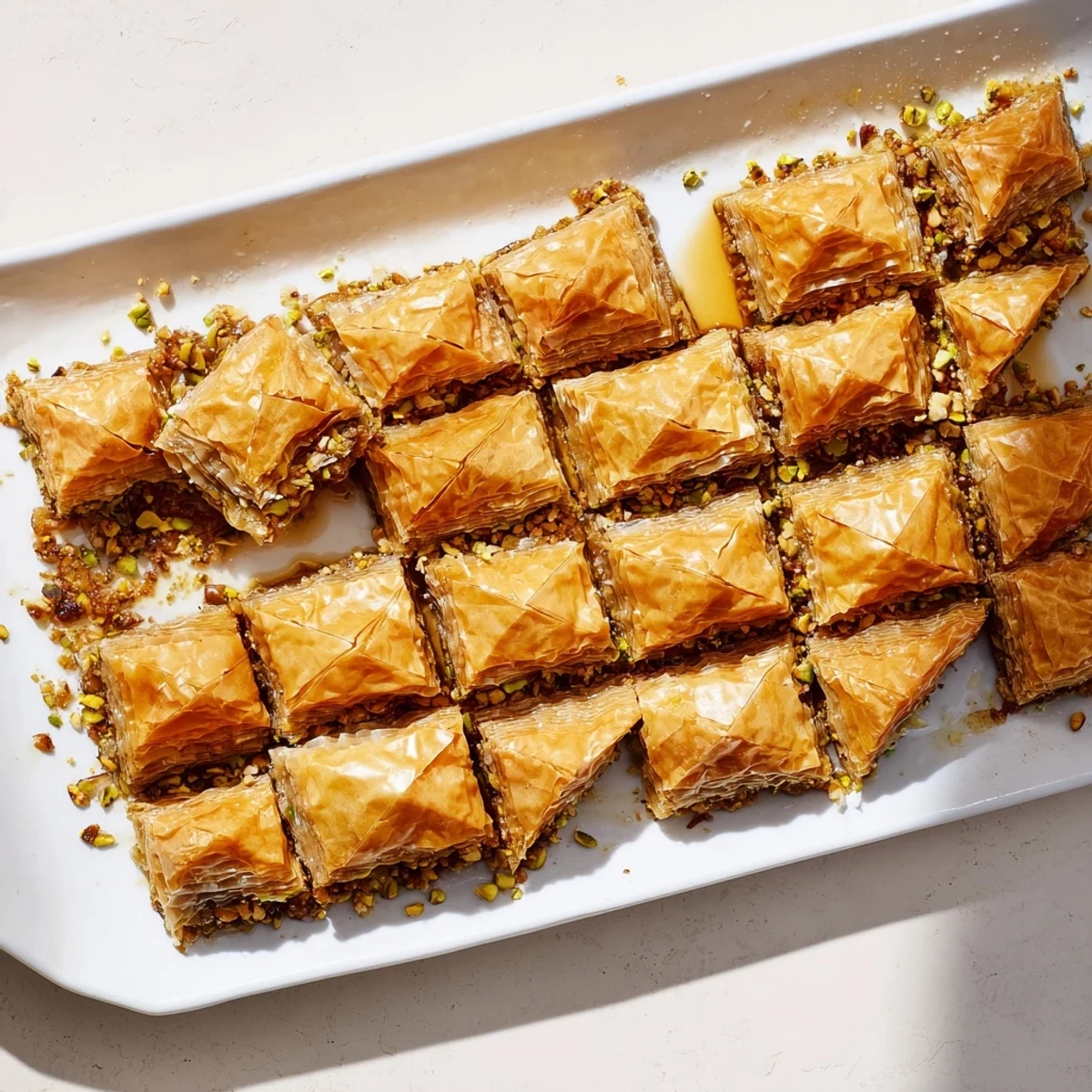
- Using your sharpest knife, cut the baklava into diamonds (traditional) or squares (easier). Cut all the way through to the bottom of the pan—this helps the syrup penetrate evenly later. Wipe your knife between cuts for clean lines.
- Bake until golden:
- Bake for 45–50 minutes, rotating the pan halfway through. You're looking for deep golden brown—the color of honey—and the top should feel firm and dry to the touch, not soft or soggy.
- Make the syrup while baking:
- Combine sugar, water, honey, cinnamon stick, and lemon peel in a saucepan. Bring to a boil, then reduce heat and simmer for exactly 10 minutes—it should thicken slightly but still pour easily. Remove from heat and let it cool while the baklava finishes baking.
- The crucial syrup step:
- As soon as the baklava comes out of the oven, pour the warm syrup slowly and evenly over the entire surface. You'll hear it sizzling—that's the sound of magic happening. Let everything cool completely in the pan before serving, at least 4 hours or overnight.
 Pin it
 I served this at my first dinner party after moving into my own apartment, nervous that something so traditional from my family would impress my new friends. They hovered around the pan, picking at diamond-shaped pieces and declaring it better than any Greek restaurant they'd tried—my yiayia would have been proud.
The Syrup Secret
The difference between good baklava and extraordinary baklava comes down to the syrup timing. Pouring warm syrup over hot pastry creates a gentle sizzle that allows the liquid to penetrate every layer without making the phyllo soggy. I've made the mistake of using boiling syrup once—never again, as it turned the bottom layer into mush despite the crispy top. The syrup should be cooled to about 50°C (122°F), just warm enough to flow easily.
Handling Phyllo Without Tears
Phyllo dough has frustrated many home cooks, but I've learned that attitude matters more than technique. Treat it gently but confidently, and don't stress if sheets tear—you can layer torn pieces and they'll fuse together during baking, creating delightfully crispy, irregular patches. The key is working quickly once you uncover the stack, keeping that damp cloth over the remaining sheets at all times.
Serving and Storage
Baklava is one of those rare desserts that improves with time, developing deeper flavor and texture as the syrup fully penetrates every layer. I always make it at least 24 hours before serving, storing it covered at room temperature—refrigeration makes the phyllo lose its signature crispness. Serve at room temperature with small cups of strong Greek coffee or mint tea to cut through the richness.
- Use a sharp serrated knife for serving to prevent crushing the delicate layers
- Place baklava on individual plates with a small fork—it's meant to be savored slowly, not eaten by hand
- A light dusting of powdered sugar right before serving adds a beautiful snow-like finish and extra sweetness
 Pin it
 There's something deeply satisfying about serving a dessert that represents centuries of tradition, made with your own hands in your own kitchen. Every diamond-shaped piece carries the warmth of family gatherings and the comfort of knowing some recipes are worth preserving, exactly as they've always been.
Recipe FAQs
- → What makes baklava authentic Greek style?
-
Traditional Greek baklava features walnuts prominently in the nut filling, uses honey in the syrup rather than just sugar, and incorporates cinnamon and cloves for warm spice notes. The syrup is always poured over the hot pastry immediately after baking, ensuring proper absorption and creating that characteristic sticky texture.
- → How do I prevent phyllo dough from drying out?
-
Keep unused phyllo sheets covered with a lightly damp kitchen towel while working. Work quickly but carefully, and have your melted butter ready before unrolling the dough. If sheets crack slightly during layering, don't worry—the butter and multiple layers will hide small imperfections.
- → Why must baklava be cut before baking?
-
Cutting through all layers before baking ensures clean edges and allows the hot syrup to reach every layer evenly after baking. Use a sharp knife and cut firmly but carefully in your desired pattern—diamonds are traditional and create beautiful presentation.
- → Can I use different nuts in baklava?
-
While walnuts are classic for Greek versions, you can substitute or combine with pistachios, almonds, pecans, or hazelnuts based on preference. Keep the total nut quantity the same and chop them finely for even distribution. Mixed nuts create complex flavor and beautiful variation.
- → How long should baklava cool before serving?
-
Allow baklava to cool completely at room temperature for at least 3-4 hours after syrup is poured—the pastry needs time to absorb the liquid properly. For best results, let it sit overnight before serving. The flavors deepen and texture improves after resting, making it even more delicious the next day.
- → What's the secret to perfectly golden baklava?
-
Generously butter every single layer, including the top surface, and bake at moderate temperature until evenly golden-brown rather than pale. The butter creates crispness and rich color. Watch closely in the final minutes—phyllo can darken quickly. The top should be golden and slightly crisp to the touch when done.