
 Pin it
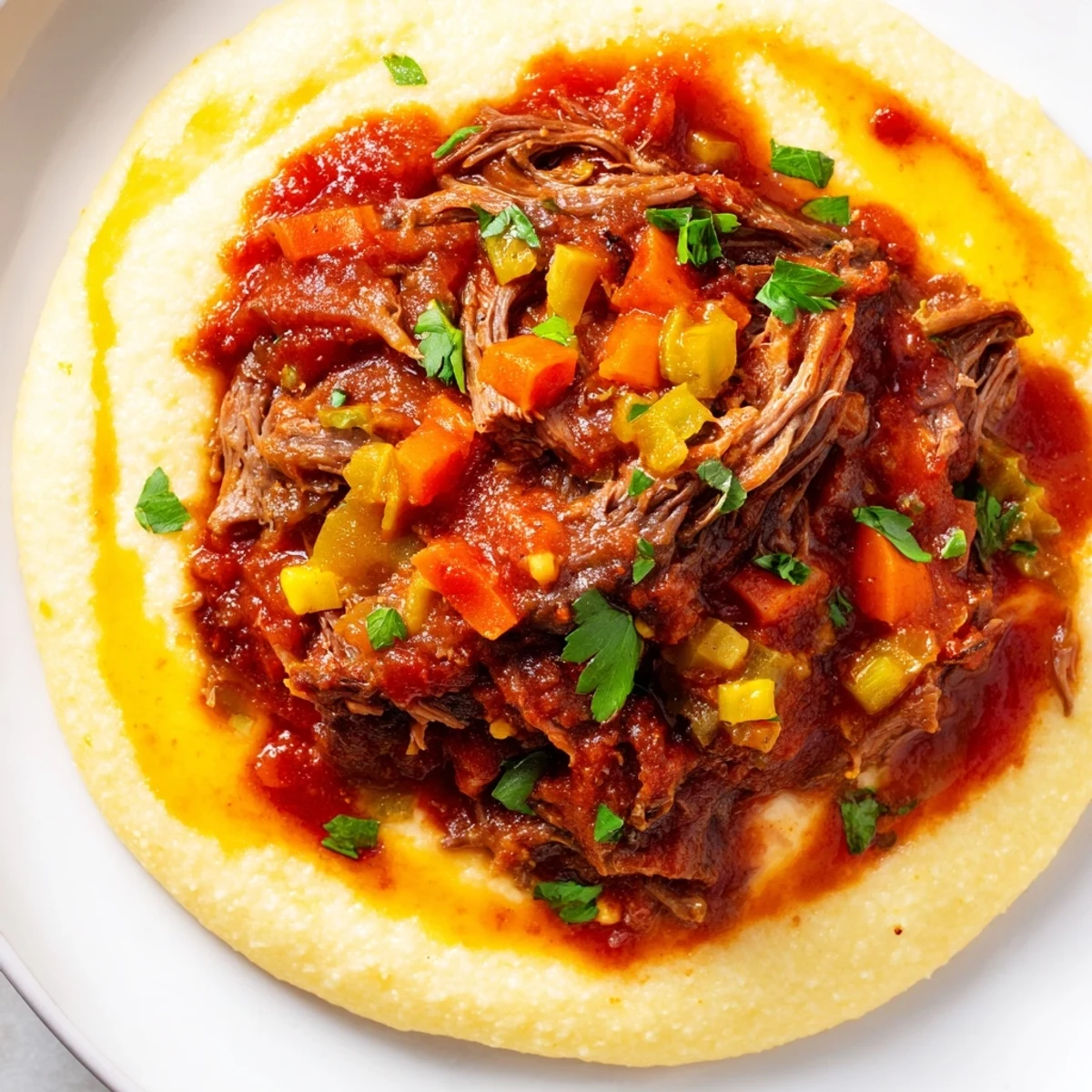
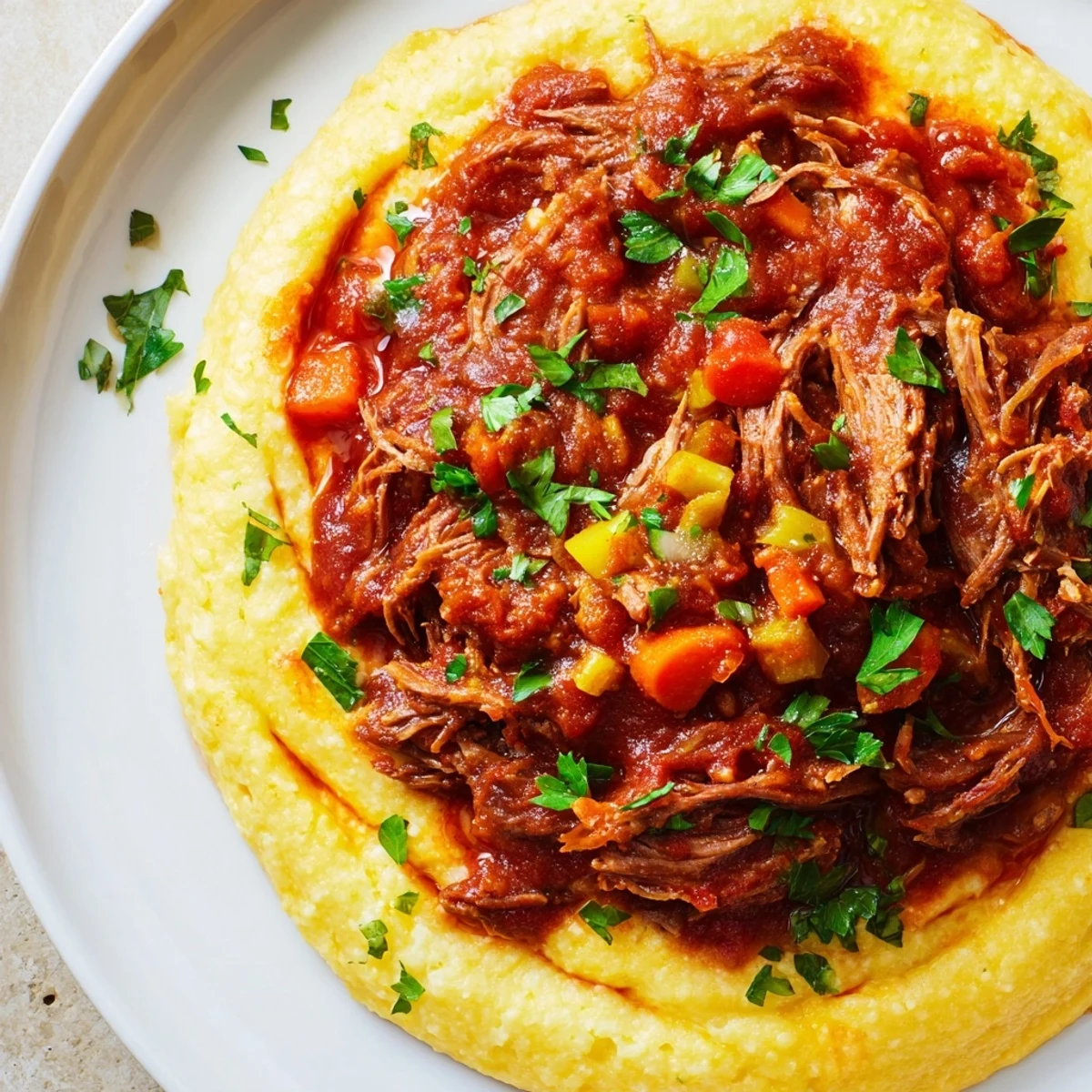
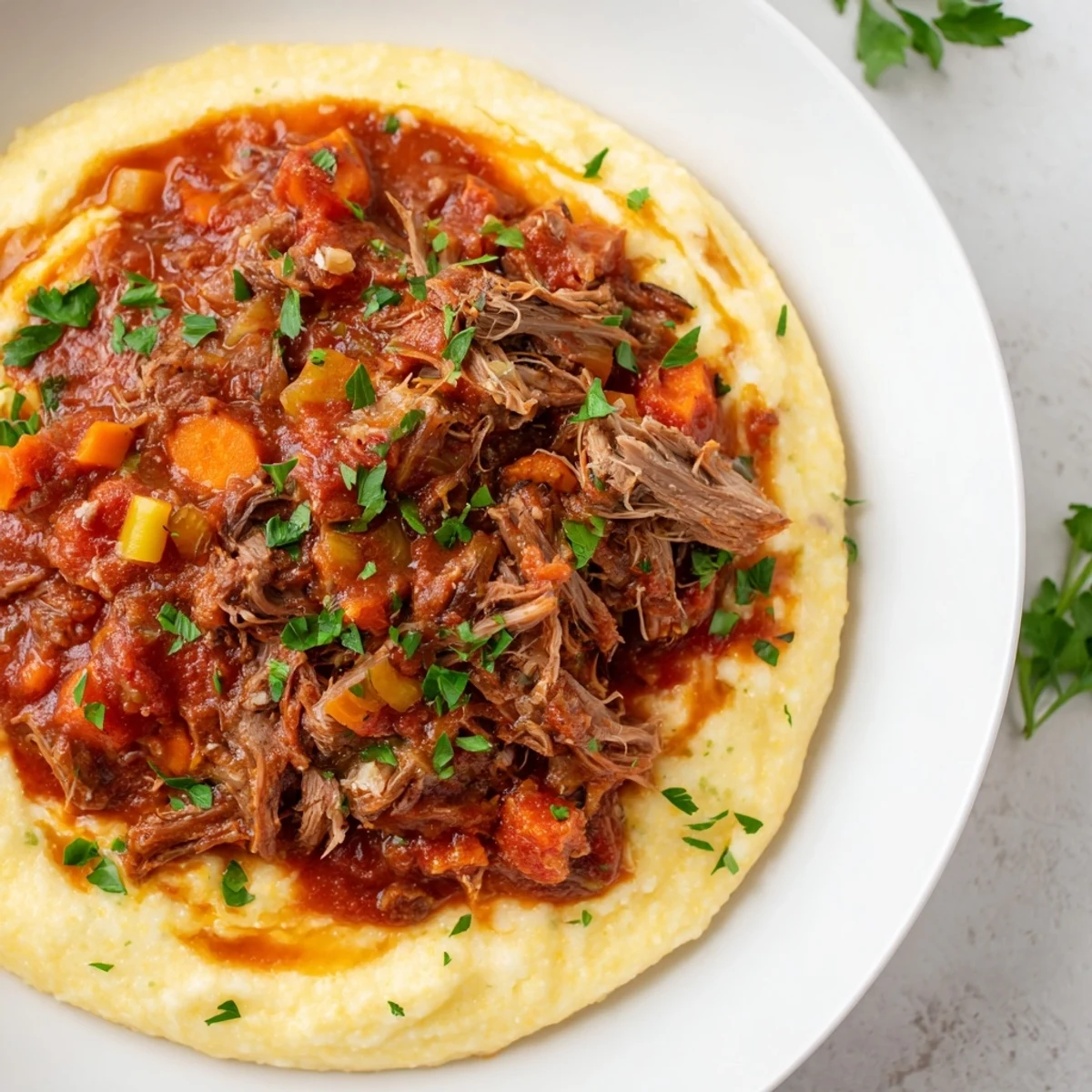
 This dish features slow-cooked beef chuck braised to tender perfection in a robust tomato and red wine sauce infused with aromatic herbs and vegetables. Served over creamy polenta enriched with butter, milk, and Parmesan, it creates a comforting meal ideal for cozy nights. The beef is seared before slow cooking to maximize flavor, while the polenta is stirred until silky smooth. Garnished with fresh parsley and Parmesan, this dish balances hearty textures and rich savory layers beautifully.
There's something about the smell of beef and wine simmering together that makes a kitchen feel like home. I first made this ragu on a cold October evening when my neighbor mentioned her Italian grandmother's Sunday ritual, and I became obsessed with recreating that deep, layered flavor without spending all day at the stove. The slow cooker became my secret weapon, turning a humble chuck roast into something so tender it practically melted on the fork. When I finally poured it over clouds of creamy polenta, I understood why that dish had survived generations.
I'll never forget the first time I served this to friends on a rainy Saturday. Everyone expected something fussy, but instead they got bowls of comfort that had them asking for seconds before they'd even finished their first bite. My friend Marco tasted it and went quiet for a moment, then said it reminded him of his nonna's kitchen—and that's when I knew I'd gotten it right.
Ingredients
- Beef chuck roast (2 lbs): This cut has enough marbling to become incredibly tender and flavorful after hours in the slow cooker; trim the excess fat but leave some in for richness.
- Olive oil (2 tbsp): Use good quality oil for searing the meat, as this browns and develops the deep flavor foundation.
- Yellow onion, garlic, carrots, celery: The soffritto base that every Italian cook knows by heart; don't rush the sautéing, let them soften and sweetly caramelize.
- Tomato paste (1 tbsp): Adds concentrated umami depth; toasting it briefly in the pan intensifies its flavor.
- Dry red wine (1 cup): Choose something you'd drink, as the acidity cuts through the richness and the alcohol mellows into the sauce.
- Crushed tomatoes (28 oz can): The backbone of the sauce; San Marzano varieties have fewer seeds and a cleaner taste if you can find them.
- Beef broth (1 cup): Adds body and umami; homemade is best, but good quality store-bought works perfectly.
- Dried oregano, dried basil, bay leaf: These herbs need time to unfurl their flavors, which is exactly what the slow cooker provides.
- Polenta (1 cup coarse cornmeal): Look for polenta labeled as coarse cornmeal; it has better texture than instant versions.
- Butter, whole milk, Parmesan: These finish the polenta with silky richness; add them at the very end so the cheese doesn't break.
Instructions
- Sear the beef:
- Heat olive oil in a large skillet over medium-high heat until it shimmers. Working in batches so you don't crowd the pan, brown the beef pieces on all sides for 2–3 minutes per batch, then transfer to your slow cooker. You're building flavor here, and that golden crust matters.
- Build the aromatics:
- In the same skillet (don't wash it), sauté the onion, garlic, carrots, and celery for about 5 minutes until they soften and start to turn translucent. Stir in the tomato paste and let it cook for 1 minute to deepen its flavor.
- Deglaze and combine:
- Pour the red wine into the skillet and use a wooden spoon to scrape up all those flavorful browned bits stuck to the bottom. Pour everything—vegetables, wine, and all those collected juices—over the beef in the slow cooker.
- Season and slow cook:
- Add the crushed tomatoes, beef broth, oregano, basil, bay leaf, salt, pepper, and red pepper flakes if using. Stir gently to combine, then cover and cook on LOW for 8 hours (or HIGH for 4 hours) until the beef shreds easily with a fork.
- Shred and adjust:
- Remove the bay leaf, then shred the beef directly in the slow cooker using two forks. Taste the sauce and add more salt or pepper as needed; the flavors should taste rich and balanced, not one-dimensional.
- Make the polenta:
- While the ragu finishes its final hour, bring 4 cups of salted water to a rolling boil in a large saucepan. Slowly whisk in the polenta in a thin stream, stirring constantly to prevent lumps from forming. This takes patience, but it's worth it.
- Cook and stir the polenta:
- Reduce the heat to low and cook for 20–25 minutes, stirring frequently with a wooden spoon. The polenta will bubble and pop a bit, so stir from the bottom to prevent sticking and burning. It's ready when it pulls away from the sides of the pan and has a creamy, thick consistency.
- Finish with richness:
- Remove the polenta from heat and stir in the milk, butter, and grated Parmesan until everything is smooth and luxurious. Taste and adjust salt if needed.
- Plate and serve:
- Divide the creamy polenta into bowls, then ladle a generous portion of beef ragu on top. Finish with fresh chopped parsley and a shower of extra Parmesan if you'd like.
 Pin it
 Years ago, my mother watched me make this and realized it was the dish that finally got me to understand Italian cooking wasn't about quick weeknight solutions—it was about respecting time and ingredients. That lesson changed everything in my kitchen.
Why This Recipe Became a Favorite
Slow cooker ragu feels like a cheat code because it genuinely is: you do maybe 30 minutes of hands-on work in the morning, and by dinner you have something that tastes like you've been stirring a pot all day. The combination of beef chuck roast and a long, slow braise transforms an inexpensive cut into something impossibly tender. Polenta, which sounds intimidating, is actually just cornmeal cooked properly—and once you master the stirring rhythm, you'll realize how simple it truly is.
Scaling and Storage
This recipe easily doubles in the slow cooker if you're feeding a crowd; just allow the same 8 hours on LOW. The ragu actually improves after a day in the refrigerator as the flavors continue to marry and deepen, so making it a day ahead is genuinely smart planning. Freeze the ragu in an airtight container for up to three months—polenta is best made fresh, but you can reheat leftover polenta gently on the stove with a splash of milk to loosen it.
What to Serve Alongside
I've learned that this dish doesn't need much accompaniment because the ragu and polenta are a complete statement by themselves. That said, a simple green salad with lemon vinaigrette cuts beautifully through the richness, and crusty bread is always welcome for soaking up sauce. If you're drinking wine with dinner, choose something with good acidity like a Chianti or Barbera—the same wine you cooked with, ideally, so there's harmony on the table.
- A handful of fresh basil scattered on top at the last moment adds brightness that rounds out all that deep richness.
- If you have a wedge of Parmigiano-Reggiano, use a microplane to grate it fresh over each bowl rather than pre-grated cheese.
- Don't be shy with the parsley garnish—it looks beautiful and adds a fresh herbal note that your palate will appreciate.
 Pin it
 This is the kind of dish that gathers people around a table and keeps them talking long after they've finished eating. I hope it becomes as much a part of your cooking life as it's become part of mine.
Recipe FAQs
- → What cut of beef works best for slow cooking?
-
Beef chuck roast is preferred due to its marbling and connective tissue, which break down during slow cooking to create tender, flavorful meat.
- → Can I substitute the red wine in the sauce?
-
Yes, beef broth or a combination of broth and balsamic vinegar can replace red wine without compromising depth of flavor.
- → How do I achieve creamy polenta texture?
-
Slowly whisk coarse polenta into boiling salted water, stirring often over low heat until thick and smooth, then finish with milk, butter, and cheese.
- → Is it necessary to sear the beef before slow cooking?
-
Searing the beef adds caramelized flavor and depth to the sauce, but it can be skipped if short on time.
- → Can this dish be prepared in advance?
-
Yes, the beef mixture can be made ahead and reheated gently. It also freezes well for convenient future meals.